How to Choose the Right Co-Working Space in Viareggio: The Definitive Guide

How to Choose the Right Co-Working Space in Viareggio: The Definitive Guide
You've decided a co-working space is the right solution for you. Great. But how do you choose the right one? Not all shared spaces are equal, and the difference between a co-working that transforms your workday and one that makes you miss your couch comes down to the details.
If you're evaluating options in Viareggio and Versilia, this guide helps you understand what to look for, which questions to ask, and which criteria to use for the right decision.
The First Criterion: Internet Connection
It seems obvious, but it's the number one factor that separates a professional co-working from an improvised space. If you work in digital — and in 2026, who doesn't? — internet connectivity is the fundamental infrastructure.
It's not enough for there to be "WiFi." You need to verify what type of connection it is: FTTH fiber is ideal, FTTC is acceptable, anything else is a risk. Check the real speed, not the advertised one: ask to run a speedtest during a working day, not on Saturday morning with an empty space. Check if there's a backup connection in case of outage. And verify that the network is separate and secure: your professional data shouldn't travel on the same network as occasional guests.
A serious co-working invests in connectivity as the absolute priority. If the WiFi is slow or unstable during your first visit, that's a clear signal.
Location: Convenient for You, Accessible for Clients
Where is the co-working relative to your daily life? This aspect is often underestimated but is crucial for long-term sustainability.
If you need to go there every day, it must be reachable in reasonable time. Ideally, no more than 15-20 minutes from home — otherwise the advantage over the home office diminishes. Consider how you'll get there: by car? Then parking is essential, and in Viareggio parking is notoriously problematic. By bike or on foot? Check that the area is safe and well-connected. By train? Proximity to the station is an important plus.
If you receive clients, location becomes even more important. A space in a central or semi-central area communicates professionalism. A space in an industrial zone may cost less, but the impression on clients is different.
Environment and Design: It's Not Just Aesthetics
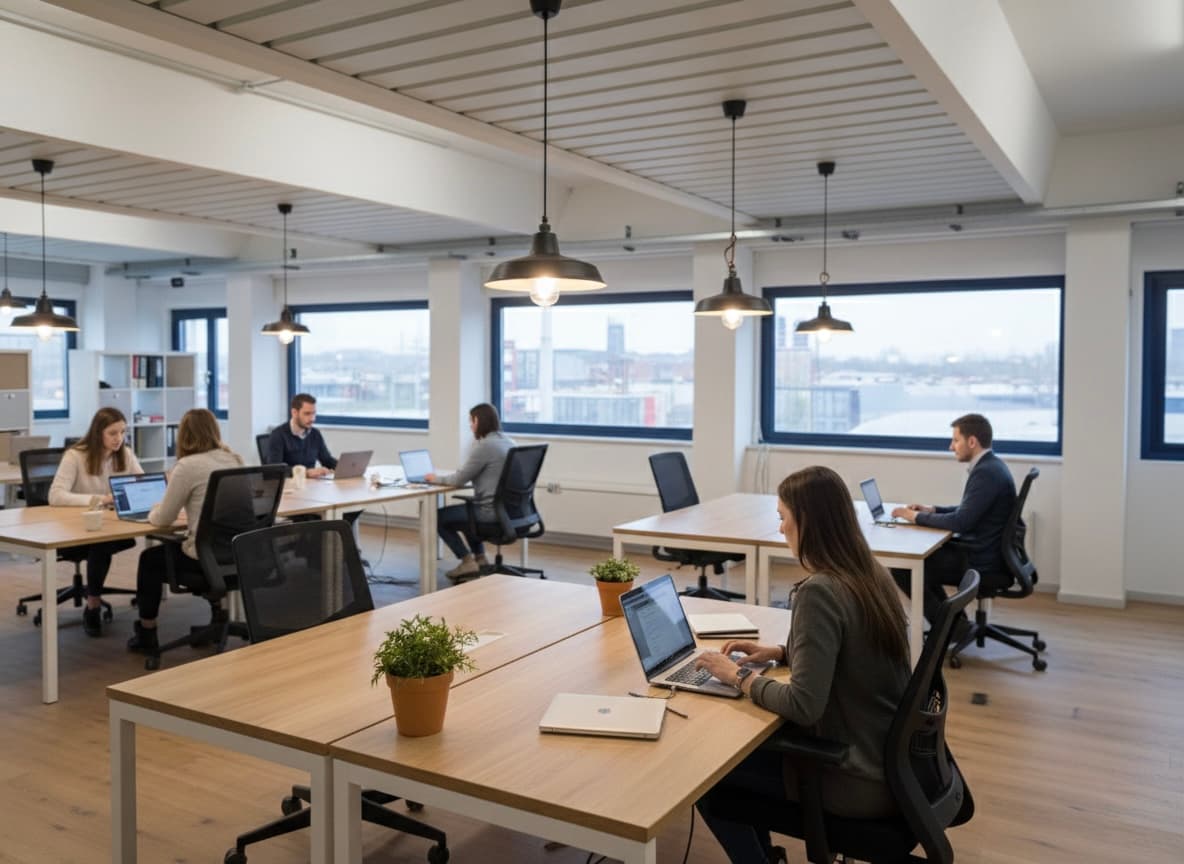
The design of a workspace directly influences your productivity, your mood, and your ability to focus. It's not vanity: it's science. A space with abundant natural light reduces eye strain and improves mood. Acoustics matter: an open space without any acoustic treatment means constant noise that destroys concentration. The presence of plants, natural materials, and warm colors has documented effects on stress reduction.
When visiting a co-working, ask yourself: do I feel good in this space? Can I imagine myself here every day for months? If the answer is no, regardless of how competitive the prices are, it's not the right space for you.
Workstations: Ergonomics and Comfort
You'll spend hours sitting at a desk. Workstation quality isn't optional.
Check the chairs: are they professional ergonomic chairs or budget office chairs? You feel the difference after 4 hours of work. Are the desks large enough for your setup (laptop + external monitor + documents)? Is there the option to use external monitors? Are there enough power outlets near the workstation?
A detail many overlook: the distance between workstations. Being too close to your desk neighbor makes it difficult to concentrate. A well-designed space leaves breathing room between workstations.
Services: What's Included and What's Extra
Always ask for a clear breakdown of what's included in the fee and what carries an additional cost. Basic services that should be included are fast WiFi, cleaning, utilities, coffee/water, access to common areas, and workstation furniture.
Services that may be separate: meeting rooms (often included for a certain number of hours), printing beyond a certain volume, personal lockers, legal domiciliation. Cost transparency is an important indicator of the space's seriousness.
Community: The Invisible Value
This is perhaps the most underrated and most important factor. A co-working isn't just a physical space: it's a community of professionals.
What kind of people work there? Are they freelancers, startups, traditional professionals, corporate teams? Is there diversity of backgrounds and skills? Does the space organize events, aperitivos, networking moments? Is there a community manager or someone who facilitates connections?
The right community can bring you clients, collaborations, valuable advice, and a sense of belonging that the home office can't offer. Ask if you can do a trial day to "feel" the atmosphere before committing.
Contractual Flexibility
One of the main advantages of co-working over traditional offices is flexibility. But not all co-working spaces are equally flexible.
What's the minimum commitment period? One month is the standard, but some require 3 or 6 months. Can you easily upgrade or downgrade your plan? What happens if you want to leave early? Is there a trial period? Can you freeze your subscription if you travel for work?
The more flexible the co-working is in its terms, the less risk you take. And at a stage where you're still figuring out your needs, flexibility is everything.
Access Hours
Some co-working spaces have limited hours (9-6, Monday to Friday). If you work with clients in other time zones, if you prefer working evenings, or if you need weekend access, this is an important constraint.
24/7 access is a significant plus. If it's not available, at least verify that the hours cover your actual needs, not your theoretical ones.
The "Trial" Factor
The most important advice: don't sign anything without trying first. Any serious co-working offers a free trial day or one at a symbolic price. Use it. Go there on a normal working day, work for a few hours, test the connection, observe the environment, talk to the people who work there.
Website photos can be misleading. Real experience is the only test that counts.
How Altrove Stacks Up
Altrove was designed starting from exactly these criteria. Ultra-fast fiber connection with backup, ergonomic workstations with adequate space, modern design with natural light and acoustic treatment, active community with regular events, contractual flexibility with no long commitments, parking and accessible location.
But we don't ask you to take our word for it. Come and try. We offer a trial day to experience firsthand whether Altrove is the right space for you.
Conclusion
Choosing a co-working space is a decision that impacts your daily productivity, your wellbeing, and your professional opportunities. Don't settle for the first space you find: evaluate carefully, try before committing, and choose the space that truly fits your way of working.